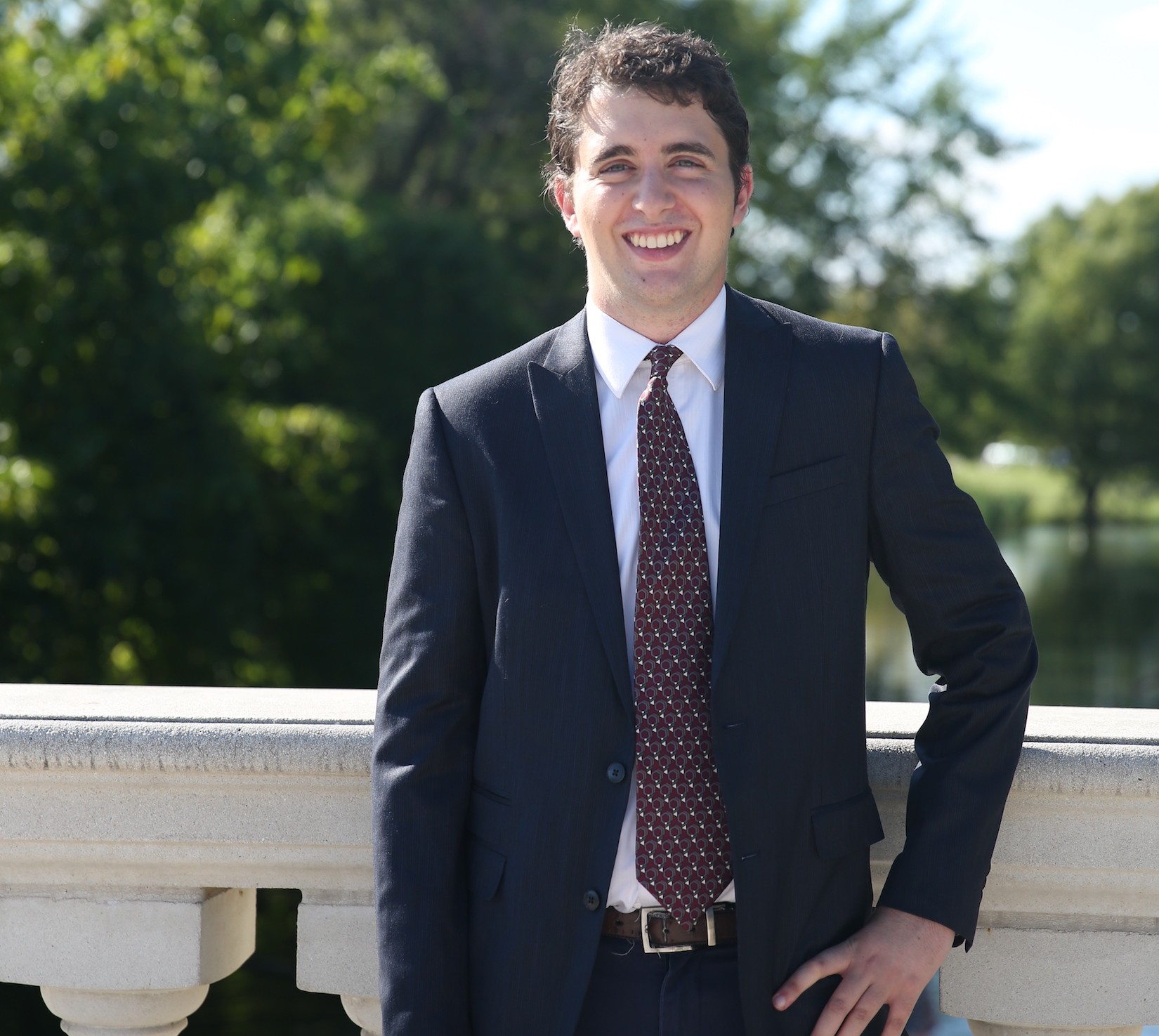
This website primarily highlights my academic social science research. I specialize in American judicial behavior and state politics. This work has been published in such peer-reviewed outlets as Political Research Quarterly, Journal of Law and Courts, and PLOS One. It has also been covered in press outlets like National Public Radio (NPR) and The Daily Mail.
Applied Research
I also conduct applied policy research in my role with the CSPL including program and policy evaluations, white papers for policymakers, and state and national polling. Summaries of this work have appeared in the Chicago Tribune and NPR Illinois.
Publications
Peer-Reviewed Articles
Waterbury, Nicholas W., Magic Wade, and Alan J. Simmons. 2026. "Converting the “union curious”? Rights-based, pro-worker arguments and Republican support for expanding collective bargaining: The case of the Illinois Workers’ Rights Amendment."
PLoS One 21(2): e0335702.
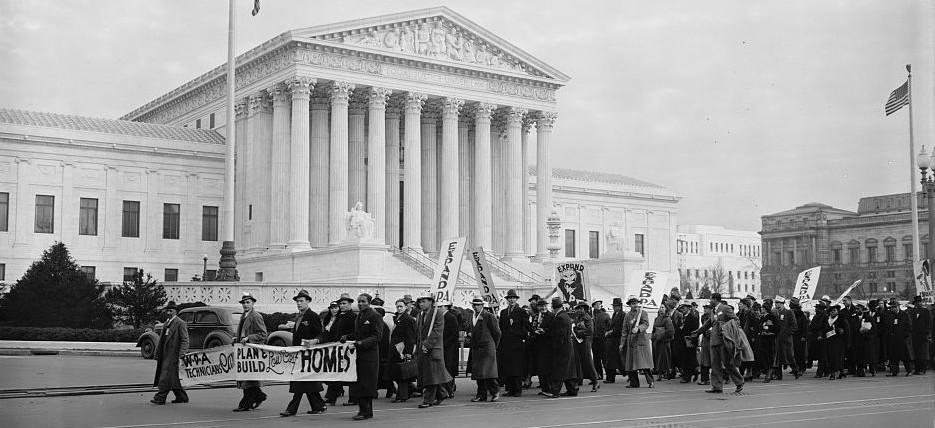
In 2022 Illinois voters were faced with a ballot measure asking them whether they supported adding a Workers’ Rights Amendment (WRA) to the state constitution. Despite countervailing forces that might have made passage difficult, the amendment passed. We explore whether support for collective bargaining rights and union protections followed a predictably partisan pattern in Illinois, or whether support for the amendment was shaped by arguments, endorsements, or other voter demographics. Fielding a survey experiment with a representative sample of 1,000 Illinois voters, we find that Democrats were more likely to support the WRA in general, but that Republicans were more likely to support it following exposure to rights-based arguments emphasizing better pay, benefits, and conditions for workers. We also find that Democrats were more likely to support it following exposure to public sector union endorsements, but that private sector endorsements did not sway Republicans. More broadly, these findings suggest future opportunities to influence potentially skeptical audiences when it comes to ballot measures related to the labor movement.
Boston, Joshua, Patrick Rickert, James F. Spriggs II, and Nicholas W. Waterbury. 2025. "The Curious Case of the Migrating Seat: Understanding the Role of Senate Norms in Confirming Judges on the U.S. Courts of Appeals."
Political Research Quarterly 79 (1): 295-308.
The confirmation of lower federal court judges heavily depends on the application of two Senate norms:
Senatorial Courtesy and the Blue Slip. But prior work largely ignores State Representation-a norm
whereby each U.S. Courts of Appeals judgeship is assigned to a particular state in the Circuit. Given
this norm, senators expect that the President will nominate someone from the same state as the departing
circuit judge. However, presidents fail to follow this norm nearly 25 percent of the time. This research
analyzes how state representation-specifically the president's decision to defy the norm-influences
the confirmation process. We argue that ignoring state representation norms increases the level of
conflict over a nominee. As a result, both previous and new home-state senators will have some sway over
their colleagues. Our results reveal several implications of violating the norm of state representation.
The (1) probability of the Senate confirming a nominee and (2) time to final action on a nomination are
decreasing in the ideological distance between the previous home state senators and the president.
Additionally, if the new home state senators reveal public opposition to a nomination, both (a) the
likelihood of rejection and (b) time to final action increase.
Waterbury, Nicholas W. 2024. "Justice Isn't Blind: Attorneys' Attractiveness and
Success in the Federal Courts."
Journal of Law and Courts
12 (2): 413-434.
Many court observers have argued that judges are capable of avoiding the use of extraneous
factors in decision-making. This study examines the influence of seemingly irrelevant heuristics
on real-world courtroom proceedings. Drawing on theories from neighboring disciplines, I
hypothesize that physically attractive attorneys have greater success in US federal court. Using
a generalizable causal inference strategy and a dataset of over 1,000 cases and 3,000 votes, I
find support for my expectations using multiple measures of attractiveness. These findings raise
serious normative concerns about equality and underscore the need to adjust traditional models
of judicial behavior to account for inherent biases.
Waterbury, Nicholas W. and Alan J. Simmons. 2025. "The Impact of Selection on State Supreme Court Ideology."
American Politics Research 53 (2): 209-221.
Among political institutions in the United States, state courts are surprisingly susceptible to ideological extremism because of the non-uniform ways judges are selected. In this paper we examine the effect of selection methods on the ideological composition of state supreme courts. We theorize that methods involving partisan politics lead to more ideological justices and that, among that subset, Republican affiliated justices will be the most extreme. We test our expectations using a dataset of over 600 state supreme court selections between 1961-2011. Using a contemporary matching algorithm designed to maximize causal identification, we find support for our hypotheses. Our results speak to the consequences of federalism in court composition and offer an insight into how polarization manifests in the judiciary.
Waterbury, Nicholas W. and Alan J. Simmons. 2024. "Elite Cues and Electoral Systems: The Impact of Political
Elites on Voter Attitudes towards Ranked-Choice Voting." Journal of Elections, Public Opinion and Parties.
Forthcoming.
In the last decade, voters in several US states and local municipalities have faced ballot
initiatives on adopting some form of ranked choice voting (RCV) in their elections. The results
of such proposals, however, have been mixed and unpredictable. What then explains the
variation in American voter support for RCV? While existing research suggests several
demographic factors may drive voter support, we theorize that an under-explored explanation for
variation in voter support may be the policy positions of political elites. In this project, we
expand on previous theories regarding the impact of elite cues and affective partisanship. Using a
survey experiment with a representative sample of Americans, we find that partisan attitudes
towards RCV are impacted by exposure to statements about RCV made by a respondent’s own
political party. In contrast, we do not find that attitudes towards RCV are shaped by the position
of a respondent’s out-party. We also find that attitudes are not significantly influenced by
specific party elites like Donald Trump, but that they are by a fictional non-partisan information
source. Our findings speak to the relevance of political elites and affective partisanship in
shaping voter attitudes towards electoral reforms
Simmons, Alan
J. & Nicholas W. Waterbury. 2024. "Sincere or Strategic Voters: Ranked-Choice
Voting and Candidate Selection."
American Politics Research
52(4): 367-380.
The academic debate on how voters decide which candidates to support often centers on
whether they prioritize their personal preferences or consider who can beat the opposing
candidate, known as "sincere" and "strategic" voting, respectively. However,
American research on voting behavior has largely focused on first-past-the-post (FPTP) elections.
Considering jurisdictions are adopting new electoral systems such as ranked-choice voting (RCV)
this leads to several questions about the impact of system adoption on voter decision-making.
Particularly, does the voter decision-making process differ depending on the system used? To
investigate the impact of RCV on voter decision-making and understand if voter decision-making
varies across electoral systems, we conducted a survey experiment in a federal senate election.
Our findings indicate that in comparison to FPTP elections, RCV elections may lead to decreases in
both sincere and strategic voting. Instead, RCV appears to increase voter uncertainty around how
to decide which candidates to support and leads to voters who appear to be neither sincere nor
strategic. These findings have important implications for electoral systems, voters, democracy,
and representation more broadly.
Waterbury, Nicholas W. & Alan J. Simmons. 2023. "Understanding Attitudes Towards
Alternative Electoral Systems."
Illinois Municipal Policy Journal
8(1): 1-25.
In 2022, Evanston became the second locality in Illinois to adopt Ranked-Choice Voting
(RCV)
as part of their local elections. In doing so, Evanston joined a movement that began in the early
2000s with major cities across America adopting RCV as the electoral system utilized in their
local elections. As the use of RCV spreads across the nation and Illinois, policymakers may
wonder about voter attitudes toward such policies. Utilizing survey data collected of a
representative sample of Illinoisans in Fall of 2022, we explore voter attitudes towards the use
of
RCV and additional electoral systems in Illinois. As part of the write up, we define and discuss
each electoral system explored. Through our analysis, we find that a majority of voters across the
state support all electoral system options explored, though there is important variation across
key
groups and possible systems. We explore these results and their implications for elections at the
local level across Illinois.
Schoenherr, Jessica A. & Nicholas W.
Waterbury. 2022.
"Confessions at the Supreme Court: Judicial Response to Solicitor General Error."
Journal of Law and Courts
10(1): 13-36.
As the chief litigator for the United States government, the Solicitor General plays a
crucial role in the justices' decision-making process. The justices and the Solicitor General
share a mutually-beneficial relationship that is reinforced by the Solicitor General's
willingness to provide legal advice when asked. In this paper, we examine if and how this
relationship changes when the Solicitor General files a formal "confession of error."
Using data on confessions filed between the 1979 and 2014 terms, we find the justices are
significantly less likely to support the Solicitor General's position at multiple stages of
the Court's decision-making process if the Solicitor General confesses error in light of a
policy change. This punishment is harshest when the Solicitor General provides advice as an amicus
curiae participant, but it is only temporary. These results provide new insight into the scope and
limitations of benefits allotted to the Court's most prominent litigator.
Pereira, Miguel M. & Nicholas W.
Waterbury. 2019.
"Do Voters Discount Political Scandals over Time?"
In
Political Research Quarterly:
72(3): 584-595.
This paper explores how political scandals are discounted over time. Previous research
has shown that voters respond disproportionately to recent economic conditions when evaluating
incumbents. We argue that voters discount not only the performance of incumbents in office but
also information about their personal character, largely due to accessibility biases. Building on
a comprehensive database of congressional scandals covering the last four decades, we show that
the electoral consequences of political scandals fade fairly quickly. Only cases emerging in the
election-year systematically affect the vote share of incumbents. Moral scandals are the
exception, with negative effects persisting over the entire term. In line with the mechanism
proposed, additional analyses suggest this pattern results from disproportional levels of media
attention, making moral scandals more easily retrieved from memory. The results broaden our
understanding of the nature of myopic voting and provide an explanation for the increasing
reliance on negative campaigning.
Epstein, Lee & Nicholas W. Waterbury.
2020.
"Judicial Behavior."
In
Oxford Research Encyclopedia of Politics,
ed. William Thompson. Oxford University Press, in press.
From humble origins in the 1940s, the study of judicial behavior—how and why
judges make the choices they do —has grown into an interdisciplinary, worldwide enterprise.
This chapter traces the evolution of the field, with emphasis on key developments in theory and
data. Also considered is the explosion of substantive topics falling under the rubric of
“judicial behavior.” The conclusion turns from the past and present to the future,
highlighting several promising avenues for forward movement.
PSC 242 Statistics for the Social Sciences- Fall 2023, Fall 2024
Syllabus
Washington University in St. Louis
PS 3211 Public Opinion and American Democracy- Spring 2025
Syllabus
PS 3512 The Supreme Court, Law, and Public Policy- Fall 2024, Spring 2026
Syllabus
PS 101B Introduction to American Politics- Summer 2020, Summer 2021
Syllabus
Graduate Teaching Assistant
Washington University in St. Louis
PS 582 Quantitative Political Methodology II (Generalized Linear Models)- Fall 2019
Syllabus
PS 3431 Constitutional Law- Spring 2018, Spring 2019, Spring 2020
Course Website
PS 3255 Development of the American Constitution- Fall 2018
Syllabus
PS 3211 Public Opinion and American Democracy- Fall 2017
Syllabus
On-Going Projects
Under Review
There's No Place Like Home: Home State Bias in Interstate Disputes
The US federal courts were designed to be neutral arbiters in disputes between parties from different states, but observers have long debated their success in that mission. Applying theories of in-group bias to judicial decision-making, I hypothesize that parties sharing a home state with a federal judge are more likely to succeed against out-of-state opponents. I test this expectation using a generalizable causal inference strategy and a dataset of over 800 environmental pollution cases and 2,500 votes. The results indicate that parties with a home state advantage are more likely to win a judge's vote, both when accused of pollution and when accusing others. This study highlights the normative and empirical concerns that arise when decision-makers like judges rely on preconceived biases, complicating efforts to model judicial behavior and challenging the premise of equality in the American justice system.
You’ve Got a Friend in Me? When Running Mates Matter Most: Evidence from the 2024 Presidential Campaign (with Alan J. Simmons)
For decades, political scientists have been interested in whether vice-presidential
selections matter in US presidential campaigns. By drawing on theories of political
knowledge, geographic loyalty, and electoral strategy, we argue that the question should
not be “whether” vice-presidential candidates matter, but “when” and “where.” We theorize
that the choice of a running mate matters more to voters when the presidential candidate
is less known to voters and in a running mate’s home state. We also propose two novel
“spillover” effects, that there will be added salience in the candidates’ neighboring states
and in the home states of other politicians on the vice-presidential short list. We test our
expectations in a case study by surveying a sample of more than 1,700 likely voters in the
2024 presidential election. We find support for our experience, home state, and
neighboring state hypotheses, but we do not find evidence of added opinion intensity in
short list states. These findings shed new light on the strategic role of vice-presidential
selections and the conditions under which they influence electoral outcomes.
Young, Wild, and Extreme? The Effect of Age and Sex on Anti-System and Anti-Social Attitudes (with Alan J. Simmons)
Young people are famously less likely to participate in the American political system.
Historically, this effect has been attributed to less political knowledge, a smaller stake in
the policy decisions made by political leaders, or an overall sense of apathy. This study
explores a more serious alternative: disillusionment with democracy. Drawing on research
from across the social sciences, we theorize that age is a significant predictor of
preferences for more aggressive, decisive, anti-system and anti-social political action not
often compatible with democratic systems. Using a new survey of 1,000 registered voters
in the state of Illinois, we find that younger voters are more likely to hold anti-system
attitudes. We also find that these effects are exacerbated in young men with an added
acceptance for anti-social behavior, including political violence. In a robustness check
using a nationally representative dataset, we find additional support for our findings. These
results contribute to an understanding of political participation and highlight the
challenges of any political movement or faction that relies on the engagement of younger
voters.
All Politics Is Local? The Effect of Local Predictions in Citizen Forecast Accuracy (with Alan J. Simmons)
While polling was not originally designed for forecasting, it is now the primary method used to predict U.S. election outcomes. However, a simpler alternative exists: directly asking voters what they believe the result will be—a method known as “citizen forecasting.” This paper examines the factors that influence the accuracy of citizen forecasts. Building on research related to citizen economic reporting, we argue that jurisdiction, specifically predicting outcomes within a familiar area, and information, particularly knowledge of prior electoral results, play a crucial role in shaping forecast accuracy. We theorize that citizens generally make more accurate predictions in their home states than at the national level. We further expect this effect to diminish when citizens are educated about national election outcomes, but to intensify when their home state is politically salient. To test these hypotheses, we conducted a survey experiment with more than 2,000 likely voters in the lead-up to the 2024 U.S. presidential election. We find that state-level predictions are more accurate in identifying the winning candidate but less accurate in estimating vote share. Their accuracy relative to national-level predictions is greater in presidential swing states but less when education is provided on previous national results. Understanding the dynamics behind citizen forecasts is essential, as this method can influence campaign donations, perceptions of electability, voter decision-making strategies, and acceptance of election outcomes.
Working Papers
Holidays at the High Court: The Effect of the Calendar on the US Supreme Court
Political identity has become a heuristic that increasingly aids in decision-making. For US Supreme Court Justices, political identity is tied to ideology. Traditionally this identity has been considered relatively static, when, just as with everyone else, it likely fluctuates based on the level of threat posed to the justices' respective in-groups. This paper examines the propensity of justices to engage with members of their ideological out-group during periods on the calendar when the perceived threat level is low. Drawing on literature from political psychology and behavior, I theorize increased Supreme Court collegiality during the traditional winter holiday season. I expect to observe an increase in the number of counter-attitudinal votes, a decrease in the number of dissenting votes, and less animus exchanges during oral argument. I find support for all my hypotheses using contemporary causal inference methods and datasets of over 4,000 justice votes and 1,000 oral arguments. These findings add to a growing body of work that emphasizes the effect of extraneous influences on federal judges. Such influences make it more challenging to explain judicial decisions and have the potential to influence the impartiality of the justice system.
Short Terms, Big Impact? How Term Length Influence Legislator Behavior (with
Matthew Geras, John Transue and Alan J. Simmons)
Across the fifty US states, legislative term lengths vary both across and within legislative chambers, raising questions about how these differences shape legislative behavior and electoral performance. This study leverages a unique feature of the Illinois General Assembly as a case study, to examine whether the subset of senators assigned to two-year terms behave more like their House counterparts, who serve the same term length, or their Senate colleagues, who serve four-year terms. Using a dataset of legislators from the 1980s to the present, we assess legislative consequences through measures of effort, productivity, and political ambition. Our findings contribute to the broader understanding of how institutional constraints, such as term length, shape the actions of elected officials with implications for both state and federal legislators.
Contact Me
Mailing Address
Nicholas Waterbury
University of Illinois
Center for State Policy and Leadership
MS PAC 451
Springfield, IL 62703
Other Info
Email Address: nw.waterbury@gmail.com
Website: nicholaswaterbury.com
Office Phone: 217-206-6343
Office Location: Public Affairs Center 464
Google Scholar: Nicholas W. Waterbury